Irenaeus, Shmirenaeus
Thinking about St. Irenaeus (Church Tradition) and Biblical Theology

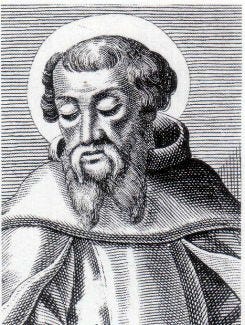
***Heads up: This writing is a little heavier and more academic than pastoral.
Recent years have witnessed an explosion of studies on Irenaeus of Lyons and his works (Demonstration of the Apostolic Preaching [Epid.] and Against Heresies [Haer.]). In this brief article, I am interested in what Irenaeus has to say about God the Father. More specifically, I am asking how Irenaeus’s presentation of God the Father relates to the New Testament (NT) and its claims or teachings about the same. (Ideally, I would survey the Old Testament [OT], but there is insufficient time, as always on these matters!)
A study of this nature carries particular weight inasmuch as it underscores the God whose character Irenaeus was careful to defend against gnostics1 and others who would irreverently assert that he was the product of a defect (Haer. 1.16.3). Indeed, one purpose of his entire first book of Against Heresies was, concomitantly with dismantling gnostic dogmas, to prove that the one God is the Creator who results from no imperfection and above whom there is nothing (Haer. 2, preface). Here, I offer a brief comparison and contrast of these two presentations with a view toward fostering conversations on the relationship between Irenaean and NT theology and between Tradition and Scripture for the life of God’s people.
That is, how might Tradition (Irenaeus’s work in this case), rightly derived from Scripture, illumine Scripture and refine present-day conversations about NT/biblical theology? On the other hand, how might Scripture continue to correct, nuance, or qualify Tradition so that one’s best-loved theological works do not become de facto replacements of the Bible? One thing is relatively straightforward: The internal logic for thinking about God the Father in Irenaeus and the NT is entirely compatible. That is, God’s names and relations (esp. “Father”) demonstrate who God is (attributes/characteristics) and what he does (activities). Hence the following passage from Epid. 8:
And the Father is called by the Spirit ‘Most High’ and ‘Almighty’ and ‘Lord of Hosts’ that we may learn [that] the God, this one Himself, He is the Maker of heaven and earth and the whole world, the Creator of angels and men, and the Lord of all, by whom all things exist, and from whom all things are nourished—merciful, compassionate, good, righteous, the God of all—both of the Jews and of the Gentiles and of the faithful (On the Apostolic Preaching, ed. and trans. John Behr, 1997, 44).
Here, the Father’s relationship to (or being known by) the Spirit results in his names such as “Most High” and “Lord of Hosts.” The purpose for which the Spirit calls the Father by these names is so that people might learn and know who God is and what he does. In this case, the Father’s names and relations reveal or indicate that he is the good, merciful, and righteous Lord and God of all (attributes/characteristics) who creates and nourishes (activities). I am thus drawing my threefold taxonomy for organizing the rest of this article from evidence internal to Against Heresies and Demonstration, which is itself a component of Tradition useful for the theological interpretation of the Scripture.
Irenaeus and the NT on God’s Names and Relations
Most importantly, God the Father is recognized with respect to the Son in Irenaeus and the NT. God is the Father of the Lord Jesus Christ and is thereby sufficiently known only through Christ the Son (Haer. 1.22.1; cf. Rom 15:6; 2 Cor 11:31; Rev 1:6). In other words, God is the Father of the one whom he loves and through whom he is known by those who would love him (Haer. 4.20.4–5). Moreover, this same love of God the Father leads humanity to him through Christ the Son (Haer. 4.20.1): all who arrive at the knowledge of the Father through Christ the Son become beloved children of God the Father and love him as such (Epid. 3).
Thus, Irenaeus agrees with the NT insofar as not everyone is God’s child in this unique, loving, and obedient sense (Epid. 8; cf. Matt 5:9; John 1:12; 11:52; Rom 8:14–16; Gal 3:26; 1 John 3:1–2; Rev 21:7). Of course, Irenaeus can also refer to God as the Father of all inasmuch as he is their ruler and source of life (Haer. 1.10.1; 2.35.3–4; Acts 17:27–29; cf. 1 Cor 8:6; Eph 4:6; Heb 2:10–12). More prominently, however, he is the Father of Christ and thus of those who are adopted in Christ. Only in and through the Son can the Father be known on personal/familial and peaceable conditions, resulting in everlasting life and divine communion.
Particularly crucial for Irenaeus is John’s presentation of the unity and intimacy in the Father-Son relationship. That is, John’s Gospel grants Irenaeus the confidence and material to express that the Son is the ‘visible’ of the ‘invisible’ Father and that they have fellowship in all things (Haer. 2.28.8; 4.6.6; cf. 4.20.6; John 14:9; 12:45; cf. Col 1:15; Heb 1:3). Perhaps surprisingly for some, Matthew’s articulation of the Father-Son relationship is arguably just as critical in this respect (Haer. 4.6.3; Matt 11:27).
Irenaeus and the NT also rule out any competitive relationships one might predicate of the Father. God the Father is the supreme king (Epid. 8; Haer. 3.5.1; cf. 1 Tim 1:17) and the source of all things (Epid. 4–5; Haer. 5.32.1; cf. 1 Cor 8:4–6; Eph 4:6). Now, it is possible that texts such as Eph 4:6, as creedal fragments, refer more to all believers than to all creation. The four substantival adjectives in the text (“all”) can be all of the neuter gender (“all things”), all of the masculine gender (“all people”), or some partial combination (e.g., three neuter and one masculine). However, there is enough precedent elsewhere in the NT to confirm that Irenaeus’s take on the Father being the origin of all things, everyone and everything, period—and thus not a gnostic product of imperfection—is apropos (e.g., Acts 17:24–31; Rom 11:36).
At the same time, God’s kingship and oneness do not rule out partnership (for lack of a better term) like they eliminate ideas of competition. Naturally, we envision the Holy Trinity. One difference of emphasis between Irenaeus’s theology and the NT’s seems to be Irenaeus’s demarcation of the relational operations between the Father and the Spirit. For Irenaeus, God the Father creates by the Son and the Spirit (Epid. 5; 10; Haer. 1.22.1; 2.30.9; 3.24.2; 4.20.1–2; 4.38.3; cf. 2.25.1–2). They are his own “Hands” for this work (Epid. 11; Haer. 4, preface; 5.6.1), and the Spirit is even called his “Finger” (Epid. 26). Such may be the case, but the act of the Father’s creation specifically by the Spirit’s primary agency is not stressed in the NT, unless one considers new creation and the believer’s experience of an already-not-yet eschatology (e.g., John 3:5; Rom 5:5; Titus 3:5). Here, prominence is given rather to the Son (John 1:3; 1 Cor 8:6; Col 1:16; Heb 1:2). Perhaps this difference of presentation may be attributed to the fact that the Spirit, to Irenaeus, is God’s Wisdom (cf. Epid. 5; 10; Haer. 1.22.1; 2.30.9; 3.24.2; 4.20.1–2; 4.38.3; cf. 2.25.1–2 and Isa 11:2), whereas the NT more readily associates Wisdom with Jesus (cf. John 1:1–18; 1 Cor 1:24, 30; although, see Acts 6:3–10). Also, Irenaeus depends more on Gen 1:26 for his interpretation of the relationship between Father and Spirit in this regard than any NT text (Haer. 4, preface).
An orthodox axiom like omnia opera Trinitatis ad extra indivisa sunt (“all the external works [lit. ‘toward the outside’] of the Trinity are undivided”; the work of creation in this case) could smooth out these interpretive challenges and might at times rightly be applied as a hermeneutical key or rule for unlocking obscure texts. Such is the general direction being taken by the ever-expanding ‘theological interpretation of Scripture’ (TIS) movement. But in my judgment, there remain rewarding insights to be gained through the hard, sometimes inefficient work that is allowing the biblical testaments to converge on the question by means of linguistically based exegesis and in dialogue with key theological voices like Irenaeus.
For instance, one hypothetical option would be to follow the stress on the Son’s agency in creation in the NT, saying that the Father creates by the Son (direct or primary agency) and through the Spirit (intermediate or secondary agency). God the Father’s external actions of revelation and sanctification happen “through the Spirit” (dia tou pneumatos) in 1 Cor 2:10 and 1 Cor 12:8, respectively, so a case could also be made for this phenomenon to apply to the work of creation. Thus, the general saying and appropriation of omnia opera Trinitatis ad extra indivisa sunt would hold steady but be qualified by scriptural testimony. My point would require further exegetical argumentation using these fundamental distinctions inherent to the prepositional system of Koine Greek. (That is, I would need to show that they are more than distinctions without differences, especially since Jesus is both the one by whom all things are created [Col 1:16] and through whom the ages are made [Heb 1:2; cf. John 1:3 and 1 Cor 8:6].) Here, it is meant merely to suggest one concrete and possible example of biblical theology qualifying a beloved and satisfying theological tradition. Now, perhaps this direction is what Irenaeus was getting at all along. However, the extant Latin translation(s) of Against Heresies does not easily suggest so, for God made all things per Verbum et per Sapientiam suam (“through his Word [Son] and through his Wisdom [Spirit]; Haer. 2.30.9; the original Greek may have been dia tou Logou kai dia tēs Sophias autou).
Irenaeus and the NT on God’s Attributes/Characteristics
For both Irenaeus and the NT, God’s love is distinguished. The former explains that humans can only know anything about God in the first place because of and through his loving condescension by the Son (Haer. 3.24.2; 4.20.4–5; cf. Haer. 2.17.11). Regarding the latter, one thought-provoking (though not decisive) consideration is that “God” appears within five to nine words of “love” in the NT in at least 43 verses, ranging from the Synoptic Gospels to John, to Paul’s Letters (undisputed and disputed), and to the Catholic Epistles. (Revelation is the only significant exception. Here, love is predicated of Jesus [1:5; 3:9, 19].) In contrast, “God” appears near “wrath” in 17 verses, near “peace” and “power” in 26, and “wisdom” in 15. Numbers do not tell the whole story, of course, but they suggest Irenaeus is wise to accentuate love the way he does. Central to the NT is God the Father, the gracious, compassionate, and loving God (cf. Exod 34:6–7) who has drawn near to save the rebellious world by the personal agency of his only begotten Son (John 3:16–17; Rom 5:8; Eph 2:4; 2 Thess 2:16; 1 John 4:10; Rev 1:5).
Further agreement between Irenaeus and the NT is apparent in several areas, two of which I note here. First, God is omnipotent in the sense that he is powerful to save and raise the dead as the God of the living (Haer. 4.33.13; Matt 19:16–26; 22:29–32; Mark 10:17–27). Second, Irenaeus’s focus on God being just in a retributive (not only restorative) sense comports with the NT’s general concern for the same and its concomitant emphasis on God’s impartial judgment (Haer. 4.6.5, 15.2; Acts 10:34; Rom 2:11; Gal 2:6; Eph 6:9; Col 3:25; 1 Pet 1:17). God responds to evil commensurately—and some deeds might be malicious enough to necessitate a severe response (cf. 2 Thess 1:5–10). On this note, however, Irenaeus and the NT also accentuate that God’s wrath is expressed in how he gives evildoers over to the passions and lusts they have already chosen (cf. Haer. 5.27.2; Rom 1:18–32). Wrath and the actualization of retribution are thus not proper to God in the same way as love, light, and life. These things are what God is said to be or have in himself (Matt 16:16; John 5:26; 6:57; 1 John 1:5; 4:8; cf. John 11:25) in correspondence to his being spirit/invisible (Epid. 5; Haer. 2.13.3; John 4:24; Col 1:15; 1 Tim 1:17).
Irenaeus and the NT on God’s Activities
First, in both corpora, God’s act of creating conveys his incomparable wisdom (Haer. 2.1.1, 25.1–2, 30.9; 4.38.3; 5.17.1). Only, this wisdom through creation is expressed primarily by the Spirit in Irenaeus but by Jesus in the NT (see esp. the wisdom Christology of John 1:1–18). Second, God is the one who sustains all of creation and administers/determines justice impartially, even doing so at times through human governments (Haer. 5.24; Rom 13:4; 1 Pet 2:14–15). But judgment does not have the final say. Instead, and third, God proves his power and love by saving ineffectual humans and preparing them for communion with himself through Christ (Epid. 41; Haer. 4.7.3; Rom 5:8–9).
Conclusion
One possible response to Irenaeus’s theology is that it is too dependent on refuting gnostic thought to be an accurate distillation of the NT’s portrayal of God the Father or that his depiction of the Father thus might sound more like an anti-gnostic God than a pro-biblical one, inevitable overlap notwithstanding. I am happy to say that this fear is unfounded. Irenaeus is careful to link what he says about God the Father, his names/relations, characteristics/attributes, and activities, to Scripture, especially the NT (to which this article has been limited). Above all, the Father is the gracious God of love who is now known only through his beloved Son, with whom the Father is uniquely and intimately related. Of course, differences of emphasis in theological reflection emerge between the corpora. However, valuable questions also arise through these distinctions, such that pursuing them should help refine the church’s understanding of the relationship(s) between Scripture and Tradition.
On the gnostics: “In book 1 of Against Heresies, Irenaeus set forth the views of several gnostic sects and pointed out their differences from each other, having personally interacted with several different sects of gnostics in his role as bishop and his research for this work. Though beliefs differed among the various sects, most sects shared some core beliefs, albeit with their nuances. The gnostics believed in a group of aeons, of whom the Creator or Demiurge was one, and the Savior was another. The gnostics also claimed special revelation of secret knowledge regarding the dualism of the spiritual and material realms. They believed the material realm was evil, the spiritual realm pure, and that the gnostics were the only ones capable of reaching the spiritual world because they possessed a spiritual seed within themselves.” J. H. Edwards, “Irenaeus of Lyons,” in The Essential Lexham Dictionary of Church History, ed. Michael A. G. Haykin (Bellingham, WA: Lexham Press, 2022).